Showing posts with label Fungi. Show all posts

Tuesday, 17 January 2017

Your voice matters

Why now is a good time to take positive action for the future of Norfolk's wildlife by David North, Head of People and Wildlife.  
Swallowtail by Tim Melling


If you are reading this then the chances are that you, like me, care about Norfolk’s wildlife.  Fortunately huge numbers of people in our county do value nature and now is an important time to make our voices heard.

 
Norfolk Wildlife Trust is making its voice heard by writing to our MPs asking them to sign a ‘Pledge for the Environment’.  The Wildlife Trusts, along with many other conservation organisations, including RSPB, WWF, and CPRE, are all asking MPs to support measures to ensure protection for the environment and wildlife. The full text of the pledge can be read here:http://www.green-alliance.org.uk/GreenerUK
 

There are real concerns that the protection of our environment may suffer when we leave the EU and it’s not just environmentalists that are raising this concern.

You may have heard on the news that in a recent report,  The Future of the Environment after the EU Referendum (4 January 2017),cross-party MPs from  the Environmental Audit Committee (EAC) have warned  the Government of the very real risk that vital protections for our environment, countryside and wildlife could be weakened  through the process of leaving the EU. This Committee of MPs is therefore calling on Government to introduce a new Environmental Protection Act before we leave the EU.


Currently around 80% of our environmental laws are tied in with the EU so ensuring these protections for our wildlife and countryside are not weakened during Brexit is absolutely vital if we want a positive future for our wildlife. Currently more than 170 MPs nationally have signed up to the ‘Pledge for the Environment’ but only three of our Norfolk MPs are on this list.


Water vole by Kevin Anderson
If you care about wildlife then now is the time to write to your MP raising your concern that protection for wildlife must not be lost when we leave the European Union.  Let’s show our leaders that protection of the environment is not a side-issue to be thought about only after other concerns, like the economy and immigration, have been addressed but is an issue that is fundamental.


We all know and understand that a healthy environment rich in wildlife is actually essential to human well-being and the bedrock on which a sustainable economy can be built.  Let’s make sure our MPs understand this too and that they know we want Britain to set a world standard in environmental protection ensuring that our wildlife recovers from current declines.

To see a list of MPs that have signed the Pledge for the Environment and to check if your MP is on the list visit: http://www.green-alliance.org.uk/GreenerUK http://www.green-alliance.org.uk/GreenerUK http://www.green-alliance.org.uk/GreenerUK 


Please add your voice now by writing to your MP asking them to sign this pledge if they have not already done so.   For the Wildlife Trust’s top tips on how to contact your MP visit www.wildlifetrusts.org/Greener-UK/Take-Action www.wildlifetrusts.org/Greener-UK/Take-Action   Decisions made in the next two years are likely to determine the fate of our wildlife and countryside for decades to come.


Help us protect Hickling Broad – the heart of the Norfolk Broads

Please donate today:

  •  Call: 01603 625540 

Wednesday, 21 January 2015

January at Thorpe Marshes


Chris Durdin, NWT Thorpe Marshes

Words that came to mind on Monday’s walk around NWT Thorpe Marshes were ‘bleak’ and ‘mid-winter’. To say there was nothing to see would overstate it: a sparrowhawk dashed through as the group gathered by the railway bridge; a Cetti’s warbler sang; the odd snipe zigzagged away from unfrozen pockets within the marshes. But overall, you couldn’t help but look forward to spring.

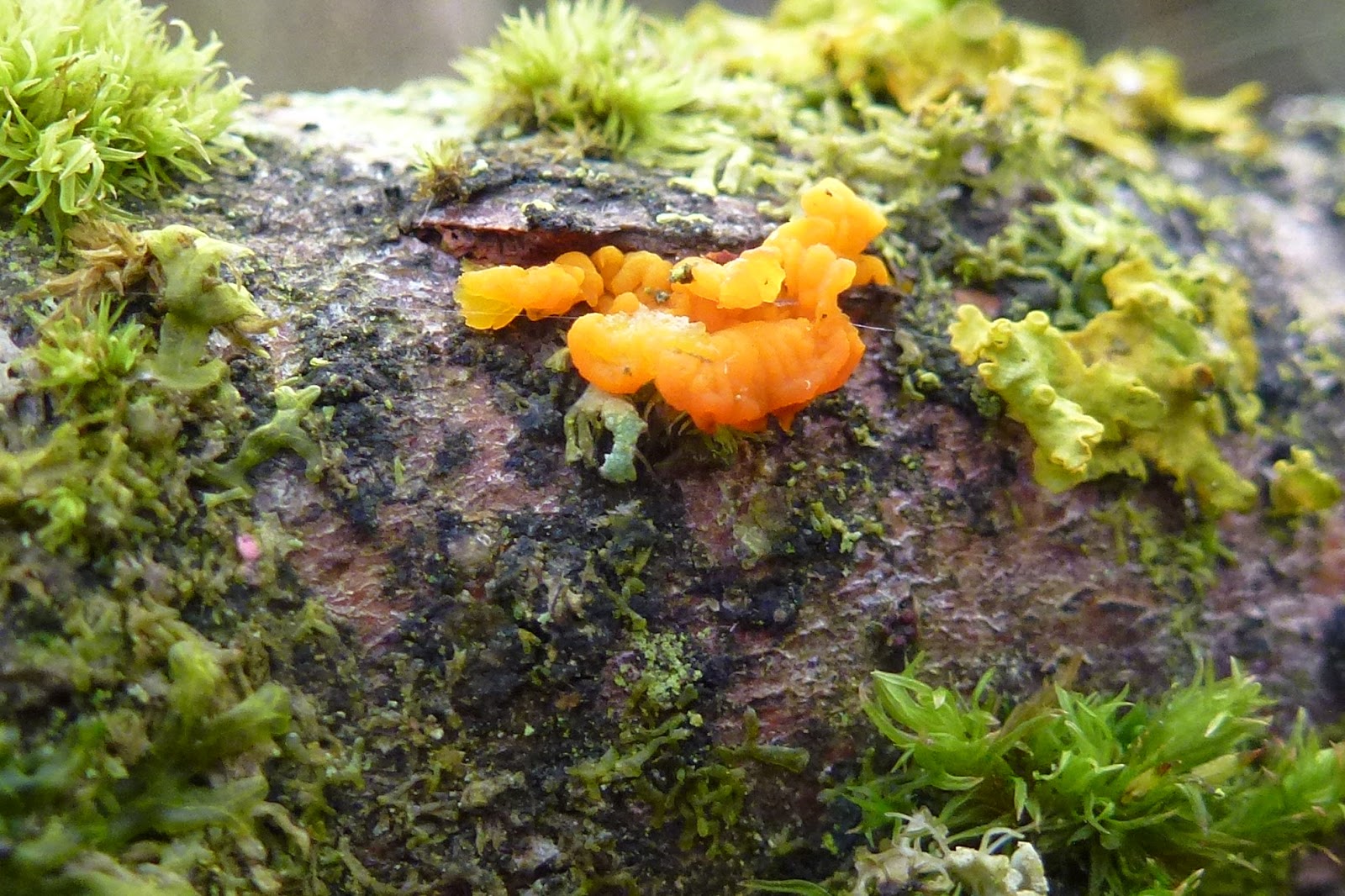
Yellow brain
At least that was true until we reached a patch of wet wood. I may be the regular guide here but there’s still lots to learn. I know I’m not good on fungi, so it was great to have participants on the regular monthly walk who do recognise them… and in a few minutes found and named seven species. Velvet Shank, Hairy Curtain Crust, Oyster Mushroom, Blushing Bracket, Southern Bracket, Yellow Brain and Smoky Bracket… none is unusual, but wonderful names, and quickly added to our knowledge of what’s here.

There were plenty of birds on the gravel pit, St Andrew’s Broad, which certainly helps to give the reserve year-round interest. As naturalists we often seek what’s unusual, at least locally: on Monday that was a group of three wigeons. 

 
Gadwall, photo by Liz Dack
Gadwalls are a more reliable sighting here, and there are about 100 of late. This dabbling duck likes to feed by waiting for diving coots to surface with waterweed and then snatching it. But with only a dozen coots, bullying opportunities are limited and they must feed for themselves. With a close view of a gadwall, perhaps through a telescope, much of the bird’s apparently dull, grey plumage is revealed as rather dapper black and white mottling. Flashes of white when loafing or swimming expand when gadwalls flap or fly: the distinctive white speculum, part of the trailing edge of the wing. Not that identification at Thorpe Marshes is a challenge: mallards all but disappear here in winter.


The NWT Thorpe Marshes Wildlife Report for 2014 is now online at on www.honeyguide.co.uk/thorpemarshes.htm. There’s also a link there to a gallery of photos of the reserve’s many dragonflies and damselflies, and pictures of the first-winter Mediterranean gull that’s on nearby River Green by Yarmouth Road, Norwich.

Saturday, 4 October 2014

October species of the month: fungi


Ed Parnell, Norfolk Wildlife Trust 

One of the great pleasures of autumn is to walk through the woods, breathing in the distinctive, slightly sweet odour of rotten wood and fallen leaves. On dead trees, around the base of stumps, and in grassy clearings, fungi will also be much in evidence but knowing which species you’re looking at is not always easy. That’s no surprise when you consider that over 10,000 fungi species have been recorded in Britain – with around 3,500 of those found in Norfolk.

Perhaps the best way to get an introduction to this mycological world is to join a fungus foray. A number of such walks are held around the county each autumn, run by Norfolk Wildlife Trust local groups, the National Trust or the Norfolk and Norwich Naturalists' Society. It’s essential to know what you’re doing where fungi are concerned, particularly if you are picking mushrooms to eat, as there are a number of poisonous species, some of which are potentially deadly. If in any doubt whatsoever stick to the mushrooms in your local supermarket!

Death Cap, photo by Tony Leech
The most common of the deadly species in the UK is the deathcap. Although this yellowish species looks rather innocuous and undistinguished its effects are anything but, with fatal kidney and liver failure resulting a couple of days after ingestion. Similar symptoms are produced by the equally emotively named destroying angel. Another to avoid is the panthercap, which at least is easier to recognise – it has a rather lethal look about it with cream spots splattered across its brown cap.

Perhaps the most distinctive poisonous species to watch out for is the fly agaric. With its bright scarlet cap, covered with white, wart-like specks, this is the archetypal fairytale toadstool. In addition to causing convulsions and a catatonic sleep it’s also strongly hallucinogenic – a property utilised by shamans of the Sami people of Lapland, as well as their reindeer, which seem to experience a similar mind-altered state when consuming these magical mushrooms. Indeed, many reindeer apparently become rather partial to the sensation, actively seeking out the toadstools when they get the chance. In Norfolk, you won’t see any reindeers behaving badly, but a good place to search for fly agarics is NWT Roydon Common, near King’s Lynn, as the site’s mixture of heathland and birch woods is ideal for this red and white gem. 

Fly agaric, photo by Peter Dent

Other interesting species found in Norfolk include: giant puffballs, which can grow up to 80cm across; King Alfred’s Cakes (ironically inedible) – small, hard rounded balls which grow on dead trees and can be seen at NWT Lower Wood, Ashwellthorpe; Chicken of the woods which, as its name suggests, tastes (apparently!) like chicken; the stinkhorn, which is often detected by its unpleasant, putrid odour, and which also has a rudely distinctive appearance – NWT Foxley Wood, just off the A1067 Norwich–Fakenham road is a good place to look for this species, as well as being generally good for all autumn fungi.

For details of Norfolk Wildlife Trust events see www.norfolkwildlifetrust.org.uk/whats on