Showing posts with label butterfly. Show all posts

Thursday, 13 April 2017

Sedge warblers return

Naturalist and Norfolk Wildlife Trust volunteer Chris Durdin welcomes the return of the sedge warbler as spring is much in evidence at Norfolk Wildlife Trust’s Thorpe Marshes reserve on the edge of Norwich in Thorpe St Andrew.  
Sedge warbler, Derek Longe
April 8th and my first sedge warbler of the year at Thorpe Marshes is singing, half-hidden, in last year’s reeds. It makes me wonder why it’s an exciting moment. The scratchy song has a relentless energy, which appeals to me, though that description also applies to the wren singing close by.

It’s looking like an advanced season for nature with the recent warm weather, for now at least. It’s certainly a good time to visit NWT’s reserve in Thorpe St Andrew on the eastern edge of Norwich. As well as spring bird song, marsh marigolds are in full flower and lady’s smock is coming out, too. Around the latter are orange-tip butterflies – for both nectar and as it’s a larval food plant – which also means the start of the survey season for some of the reserve’s volunteers. For a third year we are counting orange-tips (essentially in April and May) and Norfolk hawker dragonflies (June and July). So if you see someone on the reserve with pen and paper it may be Derek, Susan or me – but feel free to stop us for a chat, we can all multitask!
Orange tip butterfly on cuckoo flower, Derek Longe


My focus on the sedge warbler is for two reasons. One is simply as it’s a new arrival from sub-Saharan Africa, a reminder of the miracle of migration. The second links, I think, with keen birdwatchers’ constant search for the new or different. Yes, they’re back – like seeing an old friend after many months of absence. I haven’t heard a sedge warbler for ages.

What strikes as noteworthy is framed by both timing and place. For example, at Thorpe Marshes in 2017 to hear a Cetti’s warbler is routine, the strident song of this resident species much in evidence through much of the year. But go back a couple of decades and this bird would have been the surprise and across the UK – including in spring at Thorpe Marshes – it’s still scarcer than a sedge warbler. So unusualness depends on where and when.
 

Marsh marigold, Chris Durdin
I start to think: if I’d been there yesterday or the day before, could I have recorded an earlier sedge warbler? This train of thought, on reflection pointless competitiveness, is broken by the sight of male marsh harrier, with tri-coloured wings, flying low over the marshes. The harrier flushes a snipe, twists over the reeds where the sedge warbler was singing and heads up the valley towards Norwich. Moments later the call of a lesser black-backed gull encourages me to look upwards to where the gull is harrying a buzzard. 

Chris Durdin leads monthly wildlife walks at NWT Thorpe Marshes. Details of monthly walks on http://www.honeyguide.co.uk/thorpemarshes.htm

Wednesday, 22 February 2017

'The times they are a-changin’ - NWT Thorpe Marshes

Naturalist and Norfolk Wildlife Trust volunteer Chris Durdin reflects on 'new nature' and how wildlife responds to climate change at Norfolk Wildlife Trust’s Thorpe Marshes reserve on the edge of Norwich in Thorpe St Andrew.

Approaching dusk in February, and there’s a loud burst of song: a Cetti’s warbler
Cetti's warbler by Elizabeth Dack
. It’s an unremarkable record in 2017 for this bird, unusually among warblers a resident species.

But it’s a reminder of how wildlife responds to changes in climate. Cetti’s warblers first bred in Britain in Kent in 1973 and they soon moved into the Yare Valley. Broadland is now a stronghold and they are also found in wet scrub in much of the south and east of the UK.

There are plenty of other examples of ‘new nature’ on my local patch. We see little egrets fairly regularly. The first little egret I saw, in my student days, was in the Camargue in the south of France, and I can clearly recall my first in Norfolk, on Breydon Water, years later. Today it’s a distinctive and easily-recognised Broadland bird. Like Cetti’s warblers, numbers can be hit if there is a long cold spell, but how often do we get weather like that?

The Migrant Hawker dragonfly was once known as Scarce Hawker, and the new name came after regular appearances in the UK in the 20th century. Now well-established as a breeding species, it’s often the commonest dragonfly at Thorpe Marshes in late summer and with luck you can see them laying eggs. 


Speckled wood butterfly by Elizabeth Dack
More recently arriving still is the Willow Emerald damselfly, breeding in Britain for just a decade, but in good numbers at NWT Thorpe Marshes, elsewhere in the Broads and beyond. The northward spread of the speckled wood butterfly is another example.  


Losses related to climate change can be more difficult to pin down. Snipe used to ‘drum’ – their distinctive breeding display – at Thorpe Marshes when I first knew the area but have stopped breeding here, as in much of lowland England. Climate is probably partly at issue, but also subtle habitat changes. Willow warblers are getting scarcer, and cuckoos too, but for these and other birds that winter in sub-Saharan Africa other factors play a part.
For me, spotting how wildlife responds to changes in climate is obvious: what my eyes and ears reveal backs up what climate scientists say. Perhaps the climate change sceptics are less in tune with the natural world. Writing here, I hope I am preaching to the converted … and that naturalists everywhere will use the evidence of nature to challenge the cynics and doubters.

Discover Thorpe Marshes
Chris leads monthly wildlife walks at NWT Thorpe Marshes. Details of these and recent sightings on the reserve are on www.honeyguide.co.uk/thorpemarshes.htm. The website also has the 15-page NWT Thorpe Marshes Wildlife Report for 2016.

Wednesday, 30 November 2016

NWT Breckland Local Group: A butterfly ramble at East Wretham Heath Reserve


As winter draws in with cold frosty mornings - Carole Herries, Secretary of the NWT Breckland Local Group reflects back on a lovely day out earlier in the year in Breckland where she and the group encountered a host of butterflies and a beautiful moth.
  
'On a fine autumn morning on 14 September 2016, 21 members of the NWT Breckland Local Group set out on a walk at East Wretham Heath Reserve. The walk started at the information board on the reserve, and was led by the Matt Blissett, the Breckland Reserves Manager.
Peacock moth with 'footprints'


On the walk, the group viewed the many Breckland pine trees that are a key feature in the landscape.   Another welcome sight was a beautiful peacock moth with its characteristic footprint-like markings on its wings quite evident. 
Small copper butterfly


Later on a small copper provided a colourful display for us.  During our visit we walked through the wooded area of the reserve, the route taking us on a 3 mile walk which took approximately 2 hours. 


Speckled wood butterfly

Amongst some of the ferns, we observed a speckled wood butterfly which posed very nicely for the camera. Matt's talk was very informative and enjoyable talk whilst walking around the reserve - refreshments and a chat afterwards completed a really good morning.


The Breckland Local Group have recently reformed and are hoping to organise several more walks next year.'
www.norfolkwildlifetrust.org.uk/support-us/local-groups/breckland-local-group
 

All photographs by Carole Herries 

Tuesday, 7 April 2015

Norfolk butterflies in spring


Nick Acheson, NWT

Peacock butterfly photo by Pat Adams
Among the most heart-warming signs that winter is dying and spring is underway is the sight of a butterfly on a bright, mild day. Through the spring, summer and autumn Norfolk’s butterflies come in waves of species; and the date of emergence of adults of each species is closely related to its life cycle and, in particular, the state in which it spends the winter. The first wave of species to be seen, in early spring or even on mild days during winter, is of those which overwinter as adults, the technical term for an adult insect being imago. Some members of the Nymphalid family, the peacock, small tortoiseshell, comma and, increasingly, red admiral, and one member of the Pierid family, the brimstone, adopt this strategy.

Orange tip, photo by Ray Jones
The first to appear of the second wave of species –  those which have overwintered as pupae – is usually the orange-tip; the male a startling flash of colour over a wet meadow. He is quickly followed by three closely-related species in the Pieridae, the large, small and green-veined whites, which have also overwintered as pupae. At the same time green hairstreaks are busy around gorse, grizzled skippers in unimproved grassland, and holly blues in gardens and along hedgerows. The latest to emerge of the species which overwinter in this form is the swallowtail.

Meadow brown, photo by Maurice Funnell
While these early species are flying as adults, those which overwinter as caterpillars are pupating in spring, in readiness for their emergence as adults in summer. These include most of our familiar grassland species: browns (Nymphalidae), skippers (Hesperidae) and blues (Lycaenidae), though not all blues are blue. Surprisingly, Nymphalid species such as meadow browns, ringlets, graylings and gatekeepers may have fed on grasses as caterpillars all through winter. A few woodland species have also overwintered as caterpillars: white admirals on honeysuckle and silver-washed fritillaries (very recent re-colonists of Norfolk) on violets on the woodland floor.

Silver-studded blue, photo by David Tottman
Though it seems counterintuitive, very few species spend the winter in the most indestructible, hardest-to-find stage of a butterfly’s life cycle: the egg. Most are small, high summer butterflies which have time in the spring to hatch, feed as caterpillars to full size, and briefly pupate before emerging as adults in summer. The Norfolk species which use this strategy are the purple and white-letter hairstreaks, treetop butterflies of oak and elm respectively; the Essex skipper, discovered as recently as 1889; and the chalkhill and silver-studded blues, both of whose caterpillars are protected, to differing degrees, by ants, in return for sweet secretions.

Just one species, the speckled wood, is an exception, overwintering as either a caterpillar or a pupa. This flexibility may account for the speed with which it has spread north through Norfolk in living memory, aided perhaps by climate change.

As you see each butterfly species this spring and summer, spare a thought for the miracles of biology it has been through to reach maturity and brighten our Norfolk landscape as an adult.  

Saturday, 26 July 2014

Flora on NWT Weeting Heath


Matt Twydell, Weeting Heath Summer Warden
 

Spiked speedwell
NWT Weeting Heath is a prime example of a Breck Grass Heathland. Because of this we get a number of specialist Breckland plants that grow here. The main and rarest one is the Spiked Speedwell Veronica spicata (Eastern sup species). This plant flowers on the heath during July, some of the denser patches are fenced off at Weeting to protect the plants from grazing.
 

Spanish catchfly

A lot of the plants that grow at Weeting require ground disturbance for the successful establishment of new seedlings, this can be accomplished through turf stripping, rotivating or naturally through livestock or rabbits. One plant that benefits from disturbed ground is Spanish Catchfly Silene otites, these inconsequential flowers make this a hard to spot species in the long grass. 


One of the more vibrant flowers that grows here is the Maiden Pink Dianthus deltoides, which seems to have been spreading in recent years.


Maiden pink

Broad Leaved Hellborines, one of the few Orchids recorded at Weeting Heath are now in flower outside the Visitor Centre in small numbers.

Most of these plants grow in areas which are restricted to the public due to nesting stone curlews or woodlarks. You are only able to venture onto the heath when being accompanied by either the warden or a volunteer, but please do enquire at the visitor centre.


Stone Curlews
Over the last month we have had an increase in stone curlews at Weeting Heath, with a peak count of 17! Most of them are part of a post breeding flock which includes juvenile and adults. But we do have a couple of new pairs that have arrived. One of these went down on a nest a couple of weeks ago, so fingers crossed we shall have some more chicks by the end of the first week of August.

We also rang another chick several weeks ago, which has this type of flag on its leg, so keep an eye out for it.
Stone curlew chick


The upper right black (its ring combination) pair, who have fledged 1 chick already, hatched another 2 chicks last week as well. We will be hoping to go out and ring these as well in a few weeks.


Skipper on scabious plant
Other Wildlife News
Last week I found a juvenile redstart in the pines on the heath, which probably means that they bred on site or the surrounding woods, which is a first for a number of years here at Weeting.


Turtle doves, now a rare site in the countryside, continue to be seen on the woodland trail here at Weeting, with a total of three singing males being seen, young haven’t been seen so far but hopefully they have successfully fledged young this year.

Butterflies continue to be seen in good numbers. On my last butterfly transect I counted over 300 individual butterflies comprising 15 different species; the first painted lady of the year was also seen on the site last week.

Thursday, 24 July 2014

How well do you know your butterflies - THE ANSWERS

David Fieldhouse, Seasonal Education Officer


1: Gatekeeper

The gatekeeper is also known as the hedge brown due to its penchant for frequenting country hedgerows edged with brambles and long grasses. The gatekeeper employs an unhurried dancing flight as it hunts for ragwort, brambles and other food sources. This species can easily be mistaken for the meadow brown; the two can be distinguished due to the duller appearance of the meadow brown and the single white pupil in the eye spots of its forewing.


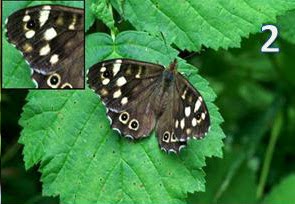
2: Speckled Wood
In the 18th Century this butterfly became known as the Enfield eye when it was identified in rural Middlesex. Today it can usually be found patrolling dappled woodland glades. The speckled wood has a greater tolerance for shade than almost any other butterfly except perhaps the white admiral. Its preferred food source is aphid honeydew located high in the woodland canopy. However, it often descends to jostle with meadow browns, ringlets and skippers amongst the bramble blossoms in sunny woodland rides. 

 
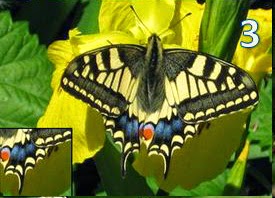
3: Swallowtail
I already waxed lyrical about this wonderful creature in my previous blog post so I’ll keep it short. Go see this superb specimen if you get the chance. The early summer will hopefully lead to a good sized second brood between mid-August and mid-September.


4: Silver studded blue
Unfortunately, this beautiful blue has become a great rarity in most parts of the UK. Countless colonies have been destroyed or shaded out. Furthermore, a reduction in rabbit populations due to myxomatosis has reduced the availability of food plants. One of the few places populations still persist is amongst the heaths of Norfolk. This is an extremely sedentary butterfly that lives in discrete colonies. The male can be distinguished from the similar common blue thanks to the thicker black margins to the wings. 

5: Brimstone
The word butterfly was probably first used to describe this butter-coloured insect. The brimstone is a widespread countryside wanderer; it can regularly be seen in urban habitats too. This species never sits with its wings open; instead it presents a wonderful leaf mimic in its underside patterning. These butterflies are powerful flyers and can often be found miles away from their food source, perhaps migrating to fresh territories.


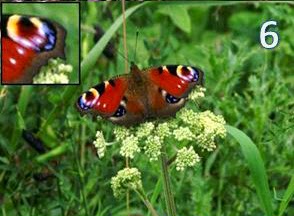
6: Peacock
The peacock is a favourite of both butterfly lovers and gardeners alike. Leave a patch of nettles to grow wild in your garden and there is a good possibility of seeing the black hairy caterpillars frequenting the leaves in June. In late summer and autumn buddleia plants can become swamped by this attractive specimen. This species has one of the largest ranges of any UK butterfly. It can be found throughout most of the UK. The peacock is one of our most easily recognized species thanks to its bright colouring and distinctive eye-spots.

7: Comma
The unique ragged outline of the comma distinguishes it from all other butterflies. This butterfly is an expert in disguise. Not only does its caterpillar look like a birds dropping but the butterfly hides so successfully during winter that few naturalists have seen its resting place. This butterfly delights in sunshine and will bask for hours with wings spread. The comma occupies a small territory, often consisting of just a few metres. It will patrol this territory, inspecting all intruders in the search for a female whilst sparring with rival males.

8: Small Copper
The small copper is the sole remaining member of the British coppers, as its relative the large copper became extinct in 1865. The small copper is relatively numerous in the UK thanks to the abundance of the caterpillars’ preferred food plants of sorrel and common dock. In good years, with lots of sunshine, three or even four broods can be produced. Despite its size the male small copper is a quarrelsome and restless little butterfly. 


Photographs courtesy of; Richard Porter, Bob Carpenter, Davis Rose, Annabelle Tipper, Paul Treloar & Elizabeth Dack.

Thursday, 17 July 2014

How well do you know your butterflies?

David Fieldhouse, Seasonal Education Officer

Butterflies are some of the most beautiful and well-loved invertebrates in the UK. Many can reminisce fondly of the sight of peacock butterflies flocking to a lilac or buddleia on a hot day, the vibrant flash of blue as a male blue flies by in search of a female to woo, or the lazy flapping of a dark green fritillary’s wings. Butterflies seem to embody the best of the British summer, as many species will only take wing on hot, windless days with full sun where they will be free to flit from flower to flower in search of nectar.

July is by far the best month of the year to see butterflies. The wonderful thing about these beguiling creatures is that you’re never far away from them. Visit your local woodland and you’ll have a good chance of seeing the ragged outline of a comma or the distinctive spots of a speckled wood. NWT Foxley Wood is a particularly good site to see the white admiral whose elegance of flight is equalled only by the purple emperor. 

If you’re closer to the coast then keep an eye out for the small heath weakly fluttering close to the ground or the large skipper. NWT Holme Dunes is a great site for these butterflies. Why not stop for a cup of tea at our newly refurbished cafĂ© and visitor centre while you’re there?

Brown argus, photo by Bob Carpenter
We are lucky enough to have a truly diverse network of habitats in Norfolk including chalky heathlands such as those found at NWT Roydon Common. More than thirty different species of butterfly have been seen at this site including the green hairstreak, which is the only UK butterfly with truly green colouration and the neat and smartly coloured brown argus.

No blog about butterflies would be complete without a mention of the jewel in the crown for butterfly enthusiasts and the public alike; the swallowtail butterfly. With a wingspan of 9cm the swallowtail is the largest UK butterfly. To see one flying powerfully over Broadland vegetation is a truly magnificent sight. They seem to be one of the few butterflies which fly with true purpose. If you go down to NWT Hickling Broad there is a high chance of seeing swallowtail caterpillars on milk parsley plants at this time of the year, their bright green colour and rubbery skin lend them an almost alien appearance. Whilst you’re at Hickling it’s also worth taking a trip on one of our boats to climb the tree tower to get a glimpse of the elusive purple hairstreak amongst the tops of the oak trees. 

How good do you think you are at identifying these delicate creatures?
Below are eight pictures, each portraying a small part of the wing of a particular species of butterfly found in the UK, how many can you identify?


Photographs courtesy of; Richard Porter, Bob Carpenter, Davis Rose, Annabelle Tipper, Paul Treloar & Elizabeth Dack.