1: Gatekeeper
 The gatekeeper is also known as the hedge brown due to its
penchant for frequenting country hedgerows edged with brambles and long grasses.
The gatekeeper employs an unhurried dancing flight as it hunts for ragwort,
brambles and other food sources. This species can easily be mistaken for the
meadow brown; the two can be distinguished due to the duller appearance of the
meadow brown and the single white pupil in the eye spots of its forewing.
The gatekeeper is also known as the hedge brown due to its
penchant for frequenting country hedgerows edged with brambles and long grasses.
The gatekeeper employs an unhurried dancing flight as it hunts for ragwort,
brambles and other food sources. This species can easily be mistaken for the
meadow brown; the two can be distinguished due to the duller appearance of the
meadow brown and the single white pupil in the eye spots of its forewing.
2: Speckled Wood
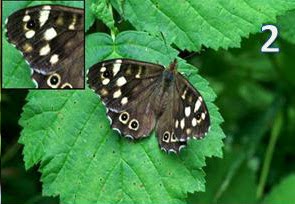 In the 18th Century this butterfly became known
as the Enfield eye when it was identified in rural Middlesex. Today it can
usually be found patrolling dappled woodland glades. The speckled wood has a
greater tolerance for shade than almost any other butterfly except perhaps the
white admiral. Its preferred food source is aphid honeydew located high in the
woodland canopy. However, it often descends to jostle with meadow browns,
ringlets and skippers amongst the bramble blossoms in sunny woodland rides.
In the 18th Century this butterfly became known
as the Enfield eye when it was identified in rural Middlesex. Today it can
usually be found patrolling dappled woodland glades. The speckled wood has a
greater tolerance for shade than almost any other butterfly except perhaps the
white admiral. Its preferred food source is aphid honeydew located high in the
woodland canopy. However, it often descends to jostle with meadow browns,
ringlets and skippers amongst the bramble blossoms in sunny woodland rides. 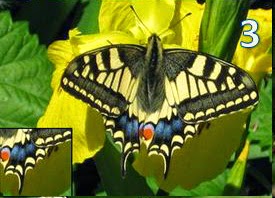
3: Swallowtail
I already waxed lyrical about this wonderful creature in my
previous blog post so I’ll keep it short. Go see this superb specimen if you
get the chance. The early summer will hopefully lead to a good sized second
brood between mid-August and mid-September.
4: Silver studded
blue
 Unfortunately, this beautiful blue has become a great rarity
in most parts of the UK. Countless colonies have been destroyed or shaded out. Furthermore,
a reduction in rabbit populations due to myxomatosis has reduced the
availability of food plants. One of the few places populations still persist is
amongst the heaths of Norfolk. This is an extremely sedentary butterfly that
lives in discrete colonies. The male can be distinguished from the similar
common blue thanks to the thicker black margins to the wings.
Unfortunately, this beautiful blue has become a great rarity
in most parts of the UK. Countless colonies have been destroyed or shaded out. Furthermore,
a reduction in rabbit populations due to myxomatosis has reduced the
availability of food plants. One of the few places populations still persist is
amongst the heaths of Norfolk. This is an extremely sedentary butterfly that
lives in discrete colonies. The male can be distinguished from the similar
common blue thanks to the thicker black margins to the wings.
5: Brimstone

The word butterfly was probably first used to describe this
butter-coloured insect. The brimstone is a widespread countryside wanderer; it
can regularly be seen in urban habitats too. This species never sits with its
wings open; instead it presents a wonderful leaf mimic in its underside
patterning. These butterflies are powerful flyers and can often be found miles
away from their food source, perhaps migrating to fresh territories.
6: Peacock
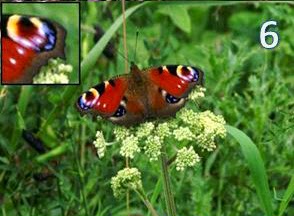 The peacock is a favourite of both butterfly lovers and
gardeners alike. Leave a patch of nettles to grow wild in your garden and there
is a good possibility of seeing the black hairy caterpillars frequenting the
leaves in June. In late summer and autumn buddleia plants can become swamped by
this attractive specimen. This species has one of the largest ranges of any UK
butterfly. It can be found throughout most of the UK. The peacock is one of our
most easily recognized species thanks to its bright colouring and distinctive
eye-spots.
The peacock is a favourite of both butterfly lovers and
gardeners alike. Leave a patch of nettles to grow wild in your garden and there
is a good possibility of seeing the black hairy caterpillars frequenting the
leaves in June. In late summer and autumn buddleia plants can become swamped by
this attractive specimen. This species has one of the largest ranges of any UK
butterfly. It can be found throughout most of the UK. The peacock is one of our
most easily recognized species thanks to its bright colouring and distinctive
eye-spots.
7: Comma
 The unique ragged outline of the comma distinguishes it from
all other butterflies. This butterfly is an expert in disguise. Not only does
its caterpillar look like a birds dropping but the butterfly hides so
successfully during winter that few naturalists have seen its resting place.
This butterfly delights in sunshine and will bask for hours with wings spread. The
comma occupies a small territory, often consisting of just a few metres. It
will patrol this territory, inspecting all intruders in the search for a female
whilst sparring with rival males.
The unique ragged outline of the comma distinguishes it from
all other butterflies. This butterfly is an expert in disguise. Not only does
its caterpillar look like a birds dropping but the butterfly hides so
successfully during winter that few naturalists have seen its resting place.
This butterfly delights in sunshine and will bask for hours with wings spread. The
comma occupies a small territory, often consisting of just a few metres. It
will patrol this territory, inspecting all intruders in the search for a female
whilst sparring with rival males.
8: Small Copper
 The small copper is the sole remaining member of the British
coppers, as its relative the large copper became extinct in 1865. The small
copper is relatively numerous in the UK thanks to the abundance of the
caterpillars’ preferred food plants of sorrel and common dock. In good years,
with lots of sunshine, three or even four broods can be produced. Despite its
size the male small copper is a quarrelsome and restless little butterfly.
The small copper is the sole remaining member of the British
coppers, as its relative the large copper became extinct in 1865. The small
copper is relatively numerous in the UK thanks to the abundance of the
caterpillars’ preferred food plants of sorrel and common dock. In good years,
with lots of sunshine, three or even four broods can be produced. Despite its
size the male small copper is a quarrelsome and restless little butterfly.
Photographs courtesy of; Richard Porter, Bob Carpenter,
Davis Rose, Annabelle Tipper, Paul Treloar & Elizabeth Dack.


