Showing posts with label stone curlew. Show all posts

Thursday, 7 July 2016

Weeting Warden's Diary: June

By Sophie Harrison and Abi Nell

The end of May was wet and cold, but despite this a new pair of stone curlews arrived and started sitting on eggs at NWT Weeting Heath. After sifting through our records we discovered that the male bird with ring combination (BTO, ORG, RED, RED) was originally ringed back in 2012 not far from Weeting. He had been previously recorded at Weeting in both 2013 and 2014 with a first nesting attempt recorded on neighbouring land in 2015. His partner with ring combination (LBU, -, LGN, DG/BTO) was first ringed in 2012 on Hockwold heath and had her first breeding attempt with another male in 2014. Stone curlews mate for life and only change partners if one passes away. This male is therefore her second partner and more her own age.
 

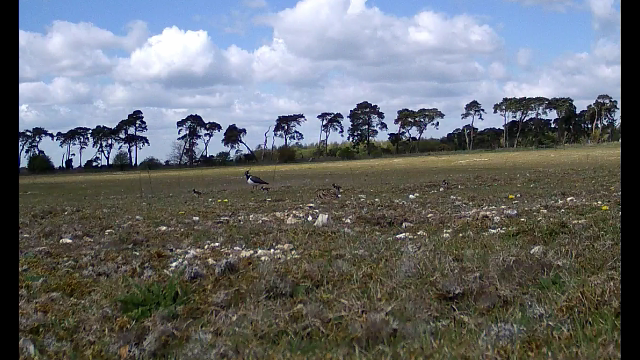
A heat wave at the beginning of June gave this pair a fighting chance and they were spotted taking turns to incubate the eggs a few days later. We were able to capture this pair on camera on 6 June and hopes were raised that this pair could rescue this year's breeding population at Weeting. However, a few days before hatching these hoped were dashed! Late one night, a hungry passing opportunist in the form of a vixen took quiet a fancy to these eggs… and had herself a tasty midnight snack! She was first seen at 23:19pm when she carried off the first egg. The crafty vixen then returned to gobble the second egg a minute later. The birds were then seen at 23:25pm when they returned to their empty nest. Dismayed, they abandoned the scrape. Their dismay was also shared by the team here at Weeting!

Since this happening on 12 June, this pair has been feeling sorry for themselves and have been seen moping about the heath looking a bit lost! We have been watching this pair very closely to see if they will have one last breeding attempt before the end of the season. However, as June begins to draw to a close, this look less likely as the stonies will require three weeks for egg incubation and six weeks for the chicks to fledge.  Earlier this week the pair were seen displaying and giving each other food parcels. Maybe this is in consolidation over their loss or it may be a positive sign signalling another breeding attempt! Fingers crossed that July's blog will have some hopeful news!

On Saturday 4 June, Weeting Heath held the event ‘Fantastic Night Fall Flyers’. The aim of the evening was to see if we could find bats, moths and nightjars unique to Weeting Heath. The event was a huge success with a great turnout! Many thanks to Matthew Blissett for his fantastic tepee moth trap set up! This trap along with four others running that night produced some fantastic moths!  Highlights included the Breckland specialist Lunar Yellow Underwing, and also fox moth, clouded buff, and elephant hawk moth (heathland specialists).

However it was the Cream Spot Tiger with its striking distinct colouration that stole the show! Cream Spot Tigers  feed on dandelion, dock and plantain. When threatened, they flash their bright red abdomen and yellow and orange underwing to avoid being eaten! (Rumour on the bird grape vine also informs me that they don’t taste very nice either!!) It may be one of the UK’s most beautiful and distinguishable moths with its striking pale spots, but this defence is necessary when they have one of the UK’s smallest population distributions!
We were out in force with bat detectors that evening,  and  picked up Soprano and common pipistrelle. Even the stone curlews were playing ball that night, as right on cue a pair soared over the pine belt during the late night walk in full view calling loudly to each other! The evening was rounded up with hot chocolates (complete with marsh mellows and cream of course!) and home baked cookies from Weeting’s star baker- Abi Nell.

The weather hasn’t made its mind up this month so has greatly confused many of our breeding species here at Weeting. Consequently, spotted flycatchers have not yet been able to breed successfully in the pines and butterfly counts have been low and in-frequent. However, when the sun decided to shine we had Holly Blues emerge and the first generation of Meadow Browns for the season! The only species that has been unaffected by this weather is the treecreepers! Terry and Teresa that decided to nest behind the VC sign last year decided they wanted a change of scenery. They relocated behind a drainpipe on the side of the west hide. This move was clearly a well thought out idea as they successfully fledged all four chicks!

This month was also the relaunch of the Breckland Local Group. The first meeting was a huge success with guest speakers Matthew Blissett and Sam Neal talking about the fantastic wildlife and reserves in the Brecks, and how important it is to get involved with monitoring and conservation work. The next event is a guided walk at Weeting Heath at 10am on Sunday 10 July. Come and discover the great variety of flora and fauna that Weeting Heath has to offer! Entry is £2 for members and £3.75 for non-members. Pop into Weeting Heath Visitor Centre for more information or contact the Breckland Local Group on 01953 548304 for more information.

An easy way to get involved with wildlife monitoring or recording in the Brecks  is to find out what NBIS (Norfolk and Norwich Naturalist Society) has to offer. Sophie and Abi have been taking advantage of the fantastic free courses from NBIS as part of their Little Ouse Wildlife Recording Festival this month. One Tuesday night they attended a freshwater invertebrates identification session with Dan Hoare (Norfolk and Norwich Naturalist Society) and the NBIS team at St Helens picnic site. The sections of the Little Ouse we sampled were full of life, with many keystone species and species that indicate river health. We discovered larvae a plently including this rather smiley beetle larvae and were amazed by the number of tiny stickle-backs, minnows and bullheads that found their way into the net! Follow the link to find out more about the NBIS events programme.


Now live: watch Sophie show YouTuber, Maddie Moate our stone curlews in NWT's 9 for 90 film in celebration of our 90th anniversary.


Tuesday, 17 May 2016

Weeting Warden's diary: April snow showers

Sophie Harrison and Abi Nell

After our last blog post the weather and the fortunes of the stone curlews at Weeting Heath took a dramatic turn for the worse. April came with bitter winds and showers of hail, sleet and snow mixed with tantalising glimpses of a warm spring sun. The butterf
lies and moths of the warm days of March have been most confused, as have the migrant birds arriving expecting to find food a plenty after their long and difficult journey.

Screenshot from the camera
After a few weeks for feeding, preening and staking out territories, all 6 of our stone curlews settled into 3 nesting pairs. Our most experienced pair (Pair 2) were first to lay, but also unfortunately, first to abandon their eggs to the cold after a particularly sharp frost. Pairs 1 and 3 had also settled onto nests a few days after Cynthia and Hew, but pair 3 likewise decided that this English weather was not the best start for their offspring, so also abandoned. These four birds left the heathland in search of shelter and food, and we are waiting to see if they will return to attempt to nest again.

Brave pair 1 have stuck it out, and have made it through the foul weather to enjoy the relief of warm sun in early May. Due to pair ones’ dedication to their brood and some clever camera instillation, we are able to bring you views of the nest live into the visitor’s centre. Sock cam has returned with an upgrade and facelift to capture the important milestones in pair ones nesting attempt. So far we have seen regular nest change overs, the parents defending their eggs against jackdaws and rooks, wheatears scampering around in the background as well as preening and feeding behaviour.
 

Volunteer Phil Hasell planting pines
As part of the Breaking New Ground project in the Brecks, we were given 25 pine trees to help develop the pine line. The pine lines of the Brecks are an iconic feature and provide several benefits to the local environment. They work as a wind break to protect the heathland, and also provide food and shelter for several species of bird (goldcrest, chiffchaff, and crossbills). Their other key role is to act as wildlife corridors to link habitats together, thus supporting rare Breckland specialist moths and beetles. Both staff and volunteers got stuck in to plant the young trees! Over the upcoming months the team at Weeting will be giving them some TLC and lots of watering to help them establish and grow to the size of their ancestors.
 
On Saturday the 23 April, the Breckland Flora group paid us a visit. They were running a workshop on Breckland Speedwell Identification. This allowed members to get their ‘eye in’ on the species, and to aid them in monitoring their own local patch. This monitoring programme has been set up to enable consistent and accurate recording of specialist Breckland Flora. If you are interested in becoming part of this programme and for more information please email Sophie.

The migrant birds have trickled into the Brecks but a few nice days in April gave us several species being sighted for the first time this season on the same day. Firecrest and willow warbler picked the 10 April to make their presence known. We also had two visitors which managed to spot two ring ouzel passing through on the 10th. The first swallows were seen over Weeting on 4 April, closely followed by blackcap on the 5th. Woodlarks and wheatears have been seen fairly regularly on the heath and from the forest walk on the finer days of the month. The first tree pipits and turtle doves have been reported on the 24 and 30 April, a nice finish to a rather quiet month.

We had a little flurry of birds of prey at the beginning of the month with a male and female peregrine spotted on the forest walk on 1 April. A goshawk sighting was also reported on that day. Sparrowhawks, kestrels and buzzards are seen regularly hunting in the pines and on the heathland around the visitors centre. 

We have been unable to run the moth trap during April as night time temperatures were nowhere near the ideal 10 degrees needed for most night flying moths. We hope to return to regular weekly trapping into May so look out for that in next month's blog. 

Monday, 25 April 2016

Weeting wakes up for spring

By Sophie Harrison and Abi Nell

Welcome back to a new season at Weeting Heath! Our stone curlews made the perilous journey from North West Africa back to Weeting on 17 March. We currently have three active breeding pairs that are spending most of the time displaying, flapping their wings and marking their territories. Pair 2, Cynthia and Hue that were the stars of the Wings Over the Brecks last season, have safely returned to hopefully breed again this year. 


As part of the Breaking New Ground project, we now have a new camera with a high quality zoom lens, which will enable us to get up close and personal to our famous heath chickens! The camera will be powered by a solar panel that is mounted on wheels looking like something off robot wars! To minimise stress for our birds we had our solar panel warrior wheeled out onto the heath prior to the birds’ arrival. When the birds start to nest, we will be able to run a camera from the power source to be within 10m of the nest. So watch this space for more Stonie updates! 

To get Weeting up and running ready for the new season, our Breckland Reserves Manager Matt Blissett, our Breckland Reserves field officer Paul Waterhouse, and our visitor centre coordinator Abi Nell were assisted by our surperb team of volunteers to give the visitor centre a much needed lick of paint. Abi and I have have been busy updating signs and waymarkers through the forest. Visitors should now be able to navigate their way around the forest trail with ease.

The dense forest is great for green woodpeckers and Roe Deer. The more open areas that look out over the heath are good for spotting stonechat, wheatear, woodlark and if you are very lucky, goshawk. As the season progresses, more species will be visible in these areas such as hobby, tree pipit, grasshopper warbler and hopefully turtle doves.
 
Bird sighting highlights in addition to our stonies on the heath so far have been lapwing, wheatear, buzzard, kestrel, skylark, common curlew and mistle thrush. The pines have been buzzing with activity from yellowhammer and nuthatch to lesser redpoll and brambling. In the forest, crossbills, goshawk and peregrines have been seen flying over, whilst stone chat hide in the gorse and woodlarks pose on fence posts.

March has had a mixture of weather conditions, but we have seen several species of butterfly on the wing on the finer, drier days. This has included peacock; comma; speckled wood; small tortoiseshell; brimstone and red admirals!  As the season progresses (and if the weather picks up), we will be monitoring the butterfly species in weekly transects across the reserve.

Pine Beauty
For the first time this season the weather conditions have been good enough to get our moth trap up and running! Species caught include Pine Beauty; Common Quaker; Dotted Chestnut; Clouded Drab; Hebrew Character;  and Twin Spotted Quaker.

You will find all staff and volunteers at NWT Weeting Heath friendly and flexible. We are always looking to recruit new volunteers to join our friendly group. Our volunteers range in age, ability and interests. We have some that help us run the visitors centre, others that are happy to get involved with hard work on the reserve and some volunteers help us with their specialist knowledge of natural history to contribute to our regular wildlife monitoring. If you have a special interest, a love of working outdoors and as part of a team or even if you are just looking for some company, we would love to meet you. Pop in and see us at any time or email us at weeting@norfolkwildlifetrust.org.uk.

·    If you have been to visit and taken some pictures that you are particularly proud of and would like to share them with the team then please send then to weeting@norfolkwildlifetrust.org.uk.

·   The Brecks Local group is now up and running again for local wildlife enthusiasts. A full list of activities will be available soon but in the mean time you can contact John Davies at safarijohn47@gmail.com to find out more. 

On Monday 2 May we are holding the ‘Wild at Weeting’ Fun Day. The event is open to families, members and non-members alike. There will be kids activities, special membership offers, a guided walk, a second-hand book stall, a cake stall, a plant stall, a moth demonstration and interesting facts about Breckland wildlife. Read more here

Tuesday, 15 March 2016

Warden's Diary: Hungry Caterpillars of Weeting Heath

Sophie Harrison, Summer Warden at Weeting

Welcome back to Weeting Heath for which I hope will be a very successful season! For the second year running, NWT Weeting Heath is involved with Breaking New Ground projects. Last season (as part of Wings over the Brecks), Sock Cam enabled us to capture the unique behaviour from our two Godwin chicks, parented by our most experienced birds Cynthia and Hue. This season, with the support of the project, we are introducing a second solar powered camera with a zoom lens. This will enhance our film footage quality, to give us a close up view of a variety of stone curlew behaviour. Stone curlews are very nest faithful and return to the same nesting spot (give or take a couple of metres) every year. Fingers crossed they will make the return journey back from Morocco to breed here again this season.


Weeting Heath is also home to the Lunar Yellow Underwing moth (Noctua orbona). This nocturnal species is recognised by its central crescent and yellow hindwings.  Now confined to the Brecks and a couple of small holdings on the Salisbury plains, it is now a rare moth to find! It is a great habitat quality indicator and requires calcareous sites with patches of well-drained soil, bare ground and tufts of grass. This makes Weeting Heath an ideal habitat for it to thrive.

This year Breaking New Ground (BNG) are holding a series of events across the Brecks. One Thursday evening on 4 February, BNG in partnership with Butterfly Conservation (BC) ran a Lunar Yellow Underwing caterpillar event at Weeting Heath.  Sharon Hearle and Sam Neal delivered an interesting talk about the caterpillars and then it was off to the heath to hunt them down! With torches in hand we went across the heath to see what we could find! Lunar Yellow Underwing caterpillars have a long larva life cycle from November to March, which is also reflected in their long flight period from July to September. By February, the caterpillars are significantly larger (and easier to spot) than if you went caterpillar hunting in November. Optimum temperatures for caterpillar hunting is ideally above 4-5 degrees.

Photo by Matt Blissett

In the Brecks, these hungry caterpillars prefer to feed on sheep fescue, wavy hair grass and brown bent. Avoiding the rabbit holes, we searched the tops of these grasses where they like to perch. However, these caterpillars can be easily confused with Square Spot Rustics, which are nearly identical in colouration. The key difference is that the Lunar Yellow Underwing (LYU) has a curled upright posture, and a chocolate brown underside, whereas the Square Spot Rustic lacks this colouration and is a lot paler. Matthew Blissett our new Breckland Reserves Manager managed to capture the hungry (LYU) caterpillars on camera in their larval stage

However, some of us found all sorts of creepy crawlies hanging out on the tufts of grass that clearly weren’t caterpillars...

Photo by Matt Blissett

This variety of invertebrates provides an excellent food source for our stone curlews!


For more information on other exciting Breaking New Ground events and projects follow this link.

For more information on the important work of Butterfly Conservation go to: http://www.butterfly-conservation.org/

Last season, Terry and Teresa the treecreepers fledged all five chicks from behind the NWT sign on the front of the visitor centre. Both our firecrests and spotted flycatchers also bred successfully in the pines last year. Hopefully they will return again this season. Come and see if you can spot our nuthatches and great spotted woodpecker returning to nest down by the woodland hide. You may be lucky and may even discover a grass snake hiding under one of our reptile tins!

Flocks of lapwing have already started to congregate on the heath, and skylarks have been seen hovering to display and mark their territory. Weeting also hosts a fantastic range of fungi. Down the path to the Woodland Hide, fruiting bodies of Earth Star fungi (Astraeus hygrometricus) have started to develop.

Photo by Sophie Harrison
Earth Star fungi are puff ball lookalikes in their earlier stages. As they grow and the fruiting body develops, the outer tissue of the ball splits to form a star shape, giving them their name. This fungus requires light sandy soils, making Weeting an ideal habitat for it to grow.

Weeting Heath reopens this season on Easter Weekend on Friday 25 March. Come and visit to see what wildlife you can find, and join in with our Easter activities to celebrate the 90th Anniversary of the Norfolk Wildlife Trust!

Monday, 15 June 2015

The Godwin chicks

Sophie Harrison, Summer Warden at Weeting Heath
 
The two stone curlews at Weeting Heath that have been the stars of the Wings over the Brecks project hatched two chicks on 16 May. Sock Cam revealed this footage as the female was seen removing egg shells from the nest. This assists hatching and draws predators away from the scrape. To be on the safe side she ate the second empty egg shell so she didn’t leave the first chick on its own. She then called to her mate to let him know the chicks had arrived.

Both chicks were successfully ringed on 10 June. The first chick weighed in at 195g with a bill length of 24.9mm, and the second at 224g with a bill length of 27.3mm. 


Three different colour rings and a metal BTO ring were gently wrapped and glued in place around their legs above and below their knees. A small piece of plastic bag was placed around the top of their leg to act as a ‘nappy’ so the glue didn’t touch their feathers.


Their heads are lightly covered to calm them and to minimise stress. While this was going on the parents didn’t take their eyes off us for a single second. Ringing enables conservationists to identify the individual birds and to monitor their progress throughout their life.  Now 26 days old, these chicks are growing fast but are still vulnerable to predation until they reach fledging age at six weeks old. These chicks have been christened ‘The Godwin Chicks’.


Frank Godwin began volunteering in 1991, making him our longest standing volunteer warden at Weeting Heath NNR. For many people the first question they ask upon arrival to Weeting Heath is ‘Is the Colonel here?’ Frank has been a very important part of Weeting Heath reserve, and knows a great deal about the history of the reserve and the stone curlews. Franks’ commitment to stone curlew conservation has been second to none and he has played a significant role in helping train the summer warden each season. He kept everyone entertained with his stories from his life in Africa, and tales of previous Weeting Summer wardens and always enjoyed taking people to the hides to show them the stone curlews. He officially retired on 11 May this year and will be thoroughly missed by staff and visitors.

Unfortunately the other chicks from our other breeding pairs didn’t quite make it to ringing.

Our first breeding pair hatched one chick on the 12 May, which was swiftly predated by a carrion crow at 11 days old. The third breeding pair managed to hatch two chicks on 10 May. Their fortunes’ weren’t much better.

A rogue male was seen trying his luck with the mother of the two chicks from our third breeding pair. In retaliation to his rejection, he unexpectedly picked up a chick and killed it! Needless to say a massive scrap ensued and four adults chased him away. This is very odd behaviour as it is frequently one adult that sees off an intruder, and cannibalisation doesn’t typically occur within the same species. However records do suggest that this peculiar behaviour happens in oystercatchers.

The second chick made it to 12 days old where it too was predated, by a stoat. The lack of hot weather has also made it difficult for the chicks to grow fast and get enough food. So fingers crossed our surviving chicks will make it to fledging!

Monday, 4 May 2015

Operation Sock Cam!


Sophie Harrison, Summer Warden

Over the last few weeks the stone curlews have started to settle on the heathland. There are now three established pairs all on scrapes. Pairs 1,2, and 3. But it is pair 3 that is to be the star of the Brecks! Our enthusiastic visitors have become quite fond of this pair, naming them Cynthia and Hue.

This year NWT Weeting Heath is part of one of the exciting Breaking New Ground projects called ‘Wings over the Brecks’. This project has been formed between the RSPB, The Forestry Commission and Norfolk Wildlife Trust. Weeting Heath is the first site to have a camera up and running recording live footage of our secretive stone curlews!

Before the arrival of the stone curlews, 150m of camera cable was set up on the heathland. Many different designs were explored by the team to find the best possible disguise for our camera...

In the end, our Reserves manager sacrificed one of his socks to expertly camouflage the camera… and Sock Cam was born! 


The launch of Sock Cam onto the heath was scheduled for a hot and sunny day. This is vitally important, as it minimises the risk of the eggs getting cold when the adults temporarily leave the nest. With radio communication between the team, we found the scrape and set Sock Cam into the ground at a suitable distance. To our delight, Cynthia and Hue returned to the scrape only 20 minutes after Sock Cam was in place.

Sock Cam went live on Friday 24 April and has already captured some interesting behaviour.

Last Friday, it captured a stoat being bombarded by lapwings. Just as it thought it had escaped, it ran into a pair of rabbits! The lapwing and rabbits joined forces to form a two pronged attack against the stoat. After a lot of scraping and the stoat leaping in the air, it hot footed it back across Sock Cam with both lapwing and rabbits in hot pursuit. While this was all going on, all the stone curlews managed to do was turn their heads and watch the drama unfold!

Other footage captured has included nest changeovers. Both Cynthia and Hue take turns sitting on the eggs, and generally swap over every two hours. The timescale of one bird arriving to the initial swap over is usually 30 seconds to a minute. However, one wet and windy day Cynthia was very reluctant to leave the nest so made Hue stand in the wind and rain for an extra two minutes. In retaliation, he then shoved her off the nest to sit down.

Both stone curlews and lapwings nest on the heathland, often in close proximity. They may join forces to see off a predator, but do not get along well with each other: stone curlews will quite happily kill and eat a lapwing chick.

During my morning’s observations I saw an unpaired male stone curlew get a little too close to a lapwing chick. Naturally the lapwing parent went ballistic: bombing, pecking and flying at the stone curlew. Reluctantly, with wings and beak outstretched, the stone curlew gave up and the lapwing chick escaped!

One of my favourite bits of footage from Sock Cam is a drake lapwing leading his four chicks across the heath. They come right behind the scrape and Hue doesn’t even bat an eyelid, as he was more intent on sitting on his eggs.

The stone curlew eggs are soon to hatch, so watch this space for future Sock Cam updates!

Wednesday, 15 April 2015

The season starts at NWT Weeting Heath

Sophie Harrison, Summer Warden

There has been plenty of stone curlew action to report since NWT Weeting Heath opened for the season on Saturday 28 March. Our first birds arrived as early as 17 March, but have had a slow start due to the high winds and cold weather. Once the sun reappeared and the weather improved, our stone curlews started to establish territories. By Easter weekend nine had arrived onto the heathland. Stone curlews are most active between first light and 9.30am in the morning, and after 4pm in the afternoon.
 

Stone curlew, photo by Gary Noakes
They are incredibly territorial birds, so the last couple of weeks have consisted of a lot of fighting and running about the heath. All the stone curlews have been running around in a group, calling continuously, with wings outstretched, and tails pointed down. There were even collisions with lapwings and rabbits, which resulted in a lot of wing flapping and the stone curlew retreating to avoid a kicking from a rabbit!

When they started to separate out into pairs, a couple of unpaired individuals would duck down low in the grass and hide to avoid confrontation. This looked like a game of hide and seek, as when one bird stood up, the other would crouch down to avoid being seen. This went on until the unpaired bird was caught out, and was then rapidly chased off by the established pair.

After all this drama, we currently have two established pairs on our heathland. In one corner of the compartment, one of our male birds would forage for food, and then turn around to feed its mate. In response to this, she would lower her beak and lift her tail, presenting herself to him. This courtship behaviour indicates to us that shortly we may have a couple of scrapes being developed with eggs to follow.
 

Firecrest, photo by Neil Coe

Other news includes our little bandit thief the firecrest! This crafty individual has been hanging around our long tailed tit's nest. Once the coast is clear, and the parents have left the nest to gather more nesting material, the firecrest seizes its opportunity and swoops in to steal the nesting material.


Treecreeper, photo by Neil Coe
 A male treecreeper has taken quiet a fancy to the NWT sign and has started to build a nest behind it! Both birds have been caught on camera by a local photographer, who kindly gave us these beautiful photos.

Since the reserve has been reopened for the season, I have been also keeping a close eye on our lapwings. We currently have five scrapes here at Weeting, so hopefully in the next two weeks we will see some eggs beginning to hatch! These birds are incredibly defensive parents and have been seen doing their ‘tumbling flights’ to draw predators away.

Butterflies that have been spotted so far this season have included: brimstone, peacock, red admiral and common blue. The chiffchaffs have also been singing their hearts out, telling us that spring really has arrived!